Showing posts with label monarch butterfly. Show all posts

Wednesday, May 18, 2022

Support Monarch Butterflies through Seeds of Spring Silent Auction

I am pleased to participate again in Monarch Joint Venture's silent auction fundraiser. Proceeds from this fundraiser advance MJV's work in protecting monarchs and their migration, and collaborating with partners to deliver habitat conservation, education, and science across the United States.

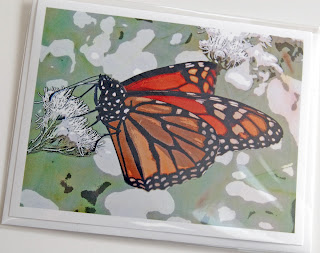
For this auction I have donated a set of eight blank note cards that feature a photographic art image of a monarch that I created. The note cards are individually wrapped in a clear sleeve, along with an envelope. The bid price includes shipping to the winning bidder's address. As of this writing, the auction has only recently begun and already they have received the minimum bid.
The bidding closes at 8:00pm CST on Tuesday, May 24, 2022. There are lots of great items that have been donated. Please consider helping raise funds to support monarch butterflies by bidding on any items that speak to you.

Saturday, March 16, 2019

Monarchs on the Move

While the fall monarch butterfly migration seems to be more concentrated through my location than the spring one, it is time for us to be on the lookout in North Texas for the butterflies are on the move. Sightings of monarchs laying eggs on milkweed in Austin have already been reported. Report your sightings too.

You can help sustain monarchs on their journey north by planting milkweed and nectar sources for them. There are many good native nectar sources as well as
flowering shrubs, annuals and perennials found more commonly in the nursery trade.

I have also seen well traveled monarchs on several flowers not included in any of these lists such as sunflowers and hyacinth vine bean flowers as seen in this post. I suggest trying to fit in some of the plants in the lists but if you can't, put out colorful nectar producing flowering plants and hope to see a fluttering patch of orange land on your flowers to refuel on its journey.

Thursday, October 4, 2018

The Queen of Monarch Butterfly Mimics

I have written several blog posts about monarch butterflies and have pictured queen butterflies in a couple of posts. (You can use the search box at the right to find them.) However I don't think I have discussed monarch butterfly mimics before. There are two butterfly species that mimic the monarch butterfly. It is thought that doing this affords them some protection from predators since birds generally leave monarch butterflies alone because they taste bad from feeding on milkweed as caterpillars. The two mimics are the viceroy butterfly and the queen butterfly. Viceroys are supposed to be in my area but I only recall having seen queen butterflies along with monarch butterflies. You can see one of each feeding on the same blue mist flower in the first photo. The queen butterfly is on the left with the monarch on the right side of the photo.

Until this week I did not realize that the queen butterfly caterpillar also mimics the monarch butterfly caterpillar. I was excited when I saw a small yellow, black and white banded caterpillar munching on a new milkweed shoot so I grabbed my camera to record it. While I was taking its picture, I was thinking that something seemed a bit off though from what I remembered monarch caterpillars looked like. My hunch was correct when I compared my images to those of monarch caterpillars, so now I had a mystery caterpillar eating milkweed that looked similar to a monarch caterpillar. What was it? I found out that it is a queen caterpillar. Queens have one more set of "horns", three instead of two to be exact, than monarch caterpillars. The monarch's are at each end, while the queen has an extra set near its midsection. While doing my research I also discovered that their chrysalises are almost identical. The queen's is a bit smaller and can take on a bit of a pink hue but unless they were side by side, I'm not sure I could ID which one I was looking at.

Sunday, December 17, 2017

State of Texas Nature Designations

I have heard it said that Texas is a state of mind. If your mind likes to linger on the nature around you, you might be interested in what critters and plants Texas has designated as the state bird, tree, etc.. I snapped the following images in my yard or DWG's Pappy Elkins Park and turned them into photographic art to celebrate the beauty of these state designated critters and plants.


State native shrub: Cenizo


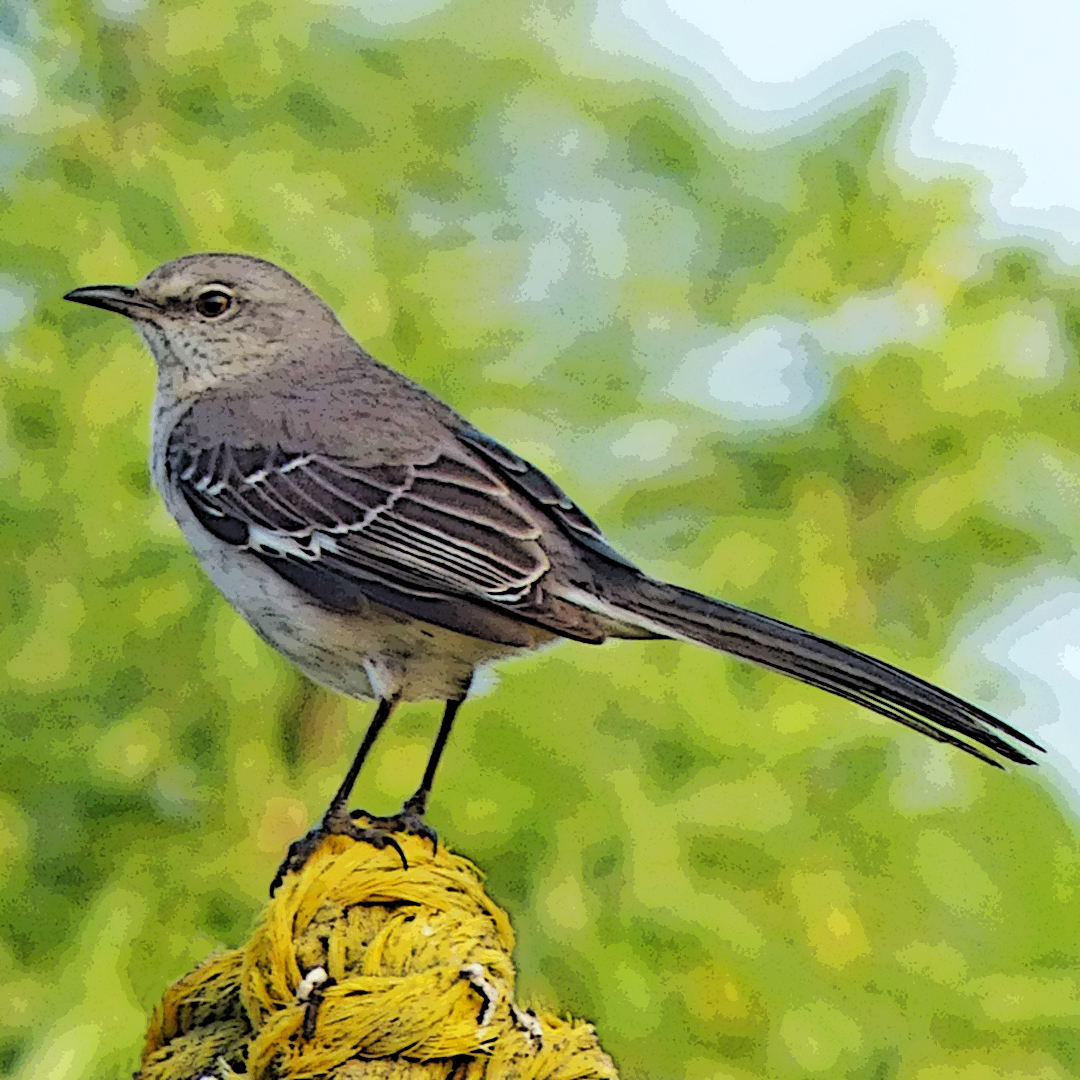
State bird: Mockingbird


State plant: Prickly Pear


State insect: Monarch butterfly


State tree: Pecan


State flower: Bluebonnet

Wednesday, March 1, 2017

Butterfly Weed Named Perennial Plant of the Year

Asclepias tuberosa or Butterfly Weed is capable of being at home in gardens across much of the country. It grows in zones 4-9, likes full sun, is deer resistant and attracts plenty of pollinators, including a large variety of butterflies. In my North Texas garden it is very drought resistant. Once established, I don't supplement its water. In fact it is rated to need as little as 10 inches of rain annually and will tolerate as much as 40 inches of rain if it has good drainage. No wonder it has been named 2017 Perennial Plant of the Year by the Perennial Plant Association.

Butterflies pictured in this post perched on butterfly weed blooms are a monarch butterfly (top) and a variegated fritillary butterfly (bottom). Because butterfly weed is a host plant for monarch butterfly caterpillars, if you are lucky enough to have monarch eggs laid on your plant(s) and witness the growth and transformation of the caterpillars, your plants may temporarily look a little worse for wear, but they will bounce back and you will have helped a generation of monarchs get off to a good start. Your local honey bees will also thank you for planting butterfly weed.
Saturday, November 19, 2016

Indian Summer Clouds of Butterflies

Here in North Texas our extended Indian Summer came to an abrupt halt yesterday. The weather during the prior week was spectacular though and the butterflies took advantage of the sunshine, warmer temps and plentiful nectar in a patch of blue mistflower and a lantana bush in my backyard. Many varieties of butterflies were attracted to both, including some very late Monarch butterflies on their trip south.

The lantana bush seemed especially popular with the sulphur butterflies. It was alive with a cloud of predominantly yellow butterflies flitting from flower to flower. How many do you see in my photo? (Click to enlarge to make your job easier.)

Queen butterflies flocked to my patch of blue mistflower. A cloud of orange erupted when I walked too close to this area of the garden. In this photo they share the nectar bounty with other butterflies and insects.