Yesterday (Saturday, Sept. 1, 2018) I saw my first monarch butterfly of the fall migration. My blue mistflower had recently started to bloom and that is what the monarch landed on. It stayed around drinking nectar for some time. It is amazing how a butterfly that covers so much territory can find and fuel up on a small backyard planting. Don't feel that you can't contribute to helping save these beautiful orange and black butterflies. A few monarch friendly plants tucked into your garden will make a difference.
In addition to mistflower, I have let some native late flowering boneset hang out in my garden after they showed up one year. Monarchs and many other pollinators fuel up on this plant. Since I added the mistflower, the monarch butterflies do seem to have a preference for it over the boneset. This first fall migrator definitely did and got its fill on the mistflower before heading on its way. I have taken some nice pictures of monarchs feeding on late flowering boneset as well as lantana and small sunflowers so don't feel you are restricted to one plant to create a fueling station for these butterflies.
Both photos in this post were taken yesterday. The honeybee was enjoying the late flowering boneset, even if the monarch wasn't. (Click the images to see a larger view.)
Showing posts with label monarch butterflies. Show all posts
Sunday, September 2, 2018
First Monarch Siting of the 2018 Fall Migration
Monday, October 23, 2017
Monarch Migration in North Texas 2017
The fall monarch butterfly migration is still going on in my part of North Texas for this year. I noted my first Monarch moving south in a facebook post on August 28 of this year. Several made their way through my yard today, stopping to refuel on my blue mistflower and lantana plantings. (Yes, I took these pics today.) The most I saw at one time today was four. I have been watching on and off since just before lunch.
Monarch butterflies are such fascinating and beautiful creatures. You can follow their progress and/or provide data to track their progress with Journey North. This is another great citizen scientist opportunity. From the looks of the data, there are quite a few monarchs that are behind schedule in other parts of the country.
You can feed migrating monarchs by planting nectar plants like those seen here. Find out specific suggestions for your part of the country on the Xerces Society website.
Monarch butterflies are such fascinating and beautiful creatures. You can follow their progress and/or provide data to track their progress with Journey North. This is another great citizen scientist opportunity. From the looks of the data, there are quite a few monarchs that are behind schedule in other parts of the country.
You can feed migrating monarchs by planting nectar plants like those seen here. Find out specific suggestions for your part of the country on the Xerces Society website.
Wednesday, August 17, 2016
Missing Monarchs
While watching a Little League regional tournament game on a trip to Michigan last month I overheard someone asking another person if they had seen any Monarch butterflies lately. They had noticed their absence and had heard about the butterflies being in decline. I joined in the conversation and added that the decline is unfortunately real and the butterflies needed help. I urged the two ladies to plant locally native milkweed in their gardens as a host plant.
You might be wondering if any reasons have been identified for the decline in Monarch butterflies. They migrate from winter havens in Mexico to as far north as Canada. It takes more than one generation to complete this migration. There have always been dangers out there that the tiny flyers needed to avoid in order to accomplish their Herculean feat. They overwinter in Mexico in large groups in order to survive the winter. However some winters like last year have events like the late sleet storm that killed many butterflies. Migrating butterflies have to avoid predators (including 
unintentional ones like cars) and find nourishment and host plants to lay eggs on in unknown territory. Fluctuations in temperatures sometimes get the migrating butterflies out of sync with the native milkweeds they count on along their route. Also, since crops such as soybean and corn have been genetically modified to be herbicide resistant, monarchs have lost vast tracts of land where milkweed mingled with crops and provided for the butterflies.That last point brings me back to the advice I gave to the ladies at the Little League tournament. Now that the majority of corn and soybean fields that line the Monarch's migration routes are devoid of milkweed, it is imperative that a concerted effort to plant more milkweed is undertaken. You can help by planting milkweed native to your area in your gardens, encouraging parks and greenspace managers to do so and (my favorite fantasy) get legislation through that would require farmers that plant pesticide resistant crops to plant compensating swaths of native milkweed on their land.
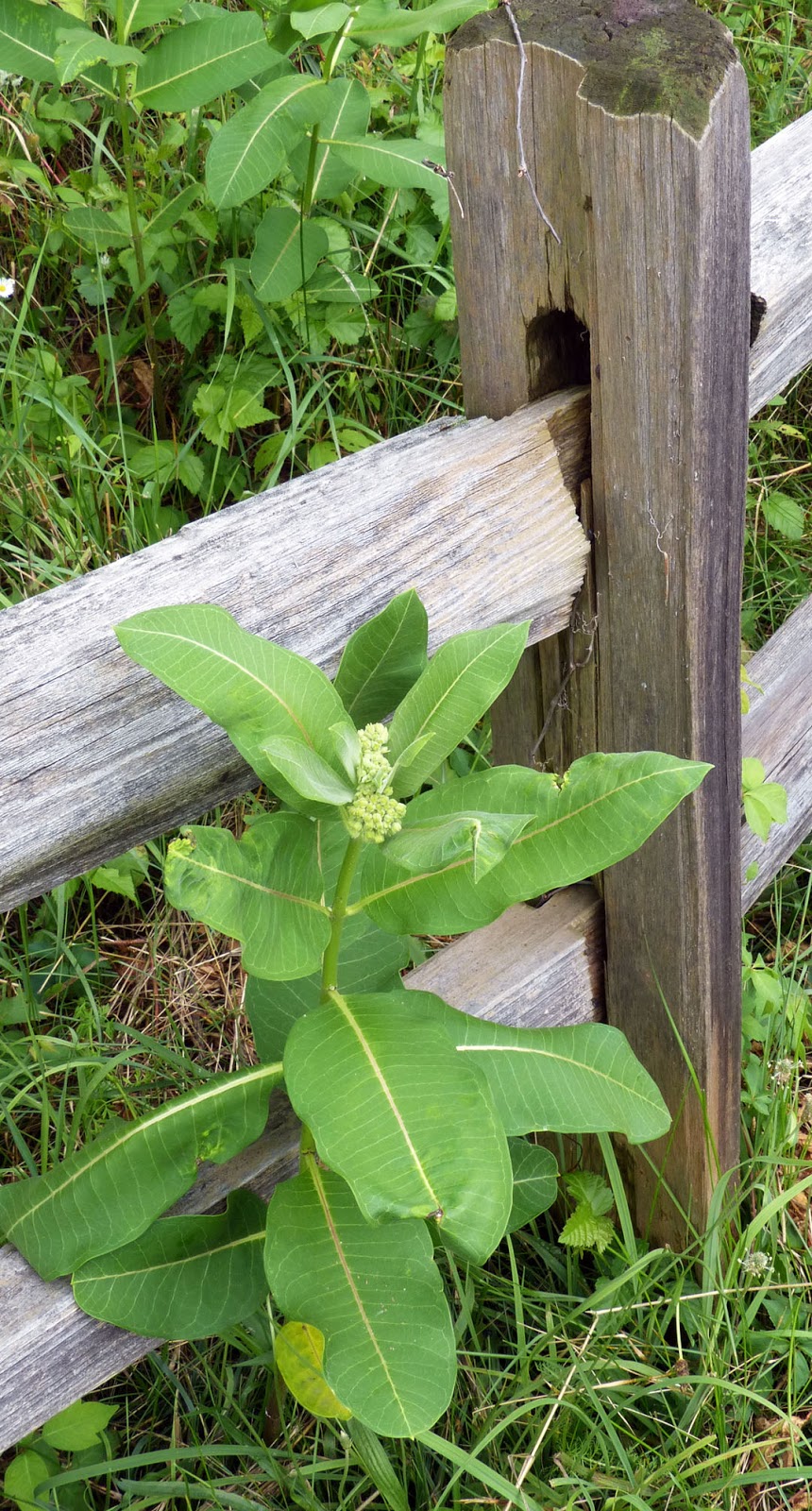
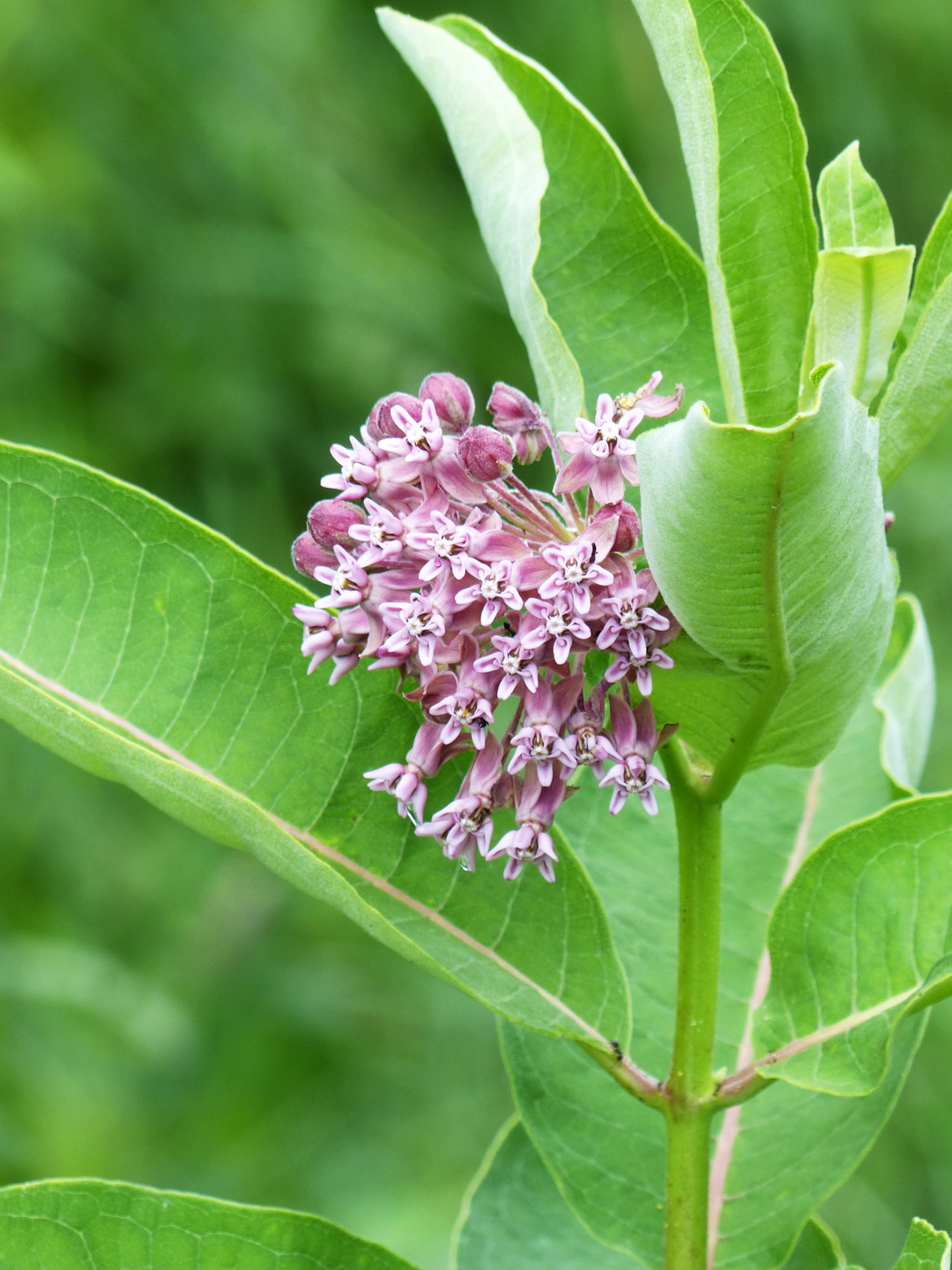
During my stay in Michigan I discovered a wonderful linear trail in Kalamazoo. Along the trail I spied local milkweed in various stages; in bud, in bloom and setting seed. During my trip I only spied one monarch. It was just outside Albion. (Images in this post are from my trip.) Hopefully since humans have drastically altered the Monarch's landscape to their detriment we will be able to find alternative areas to plant the milkweed that is essential to their continued existence.
Tuesday, March 11, 2014
Gardening for Wildlife – Monarch Butterfly Update
In October of 2010 I saw a large number of monarch butterflies grace my garden and was inspired to write a blog post encouraging my readers to add a couple of plants to their gardens to support their fall migration. This past fall I saw very few monarchs and have been hearing similar reports from a variety of sources all along their migration route. It seems the monarch butterfly population is in a steep decline. I hope the monarch does not go the way of the passenger pigeon and want to encourage you to do your small part to help this amazing butterfly survive.
In addition to the plants mentioned in my 2010 blog post, milkweed is an important addition to plantings for monarchs. There are many flowers that provide nectar for adults and garden features that you can add so that the monarch has safe roosting spaces, warm spots to get them going in the mornings and water and minerals for nourishment. Gardener’s Supply Company has a recent, detailed post that will give you more specifics on what you can do to boost the survival chances of the monarch butterfly. Please check it out and add what you can in your garden to support this beautiful butterfly.
Friday, August 23, 2013
Help for Hummingbirds
Migratory creatures seem to be feeling the effects of climate change. Polar bears don’t have as much sea ice as they used to and if temperatures continue to change as they have been monarch butterflies may not receive the temperature signals needed to start them on their way back north. Another migratory species that may need to adapt quickly due to climate change so as not to diminish is the hummingbird. Climate change effects the bloom time of its nectar sources which provide energy for its annual migrations. However, there may be ways you can help hummingbirds as changes happen to their environment.
The Audubon Society has a new citizen scientist project designed to bolster current research by documenting the feeding patterns of hummingbirds. You can find out much more information about why researchers are concerned about hummingbirds and about Audubon’s new Hummingbirds at Home Program at this link. That page also has links to find out about two other Audubon citizen scientist programs, the Christmas Bird Count and the Great Backyard Bird Count.Many research projects require simply too much data to be collected for an accurate study for one scientist or even group of scientists to collect. Often this data is something that the public is very capable of providing to the researchers for analysis. If you have some time to contribute, please consider joining other citizen scientists as they gather data for researchers to understand what types of changes are currently affecting the world we and creatures such as hummingbirds live in.
(I took the first photo in my backyard and the other at a park in San Angelo.)
Subscribe to:
Posts (Atom)