While watching a Little League regional tournament game on a trip to Michigan last month I overheard someone asking another person if they had seen any Monarch butterflies lately. They had noticed their absence and had heard about the butterflies being in decline. I joined in the conversation and added that the
decline is unfortunately real and the butterflies needed help. I urged the two ladies to plant
locally native milkweed in their gardens as a host plant.

You might be wondering if any reasons have been identified for the decline in Monarch butterflies. They migrate
from winter havens in Mexico to as far north as Canada. It takes more than one generation to complete this migration. There have always been dangers out there that the tiny flyers needed to avoid in order to accomplish their Herculean feat. They overwinter in Mexico in large groups in order to survive the winter. However some winters like last year have events like the late sleet storm that killed many butterflies. Migrating butterflies have to avoid predators (including


unintentional ones like cars) and find nourishment and host plants to lay eggs on in unknown territory. Fluctuations in temperatures sometimes get the migrating butterflies out of sync with the native milkweeds they count on along their route. Also, since crops such as soybean and corn have been genetically modified to be herbicide resistant, monarchs have
lost vast tracts of land where milkweed mingled with crops and provided for the butterflies.
That last point brings me back to the advice I gave to the ladies at the Little League tournament. Now that the majority of corn and soybean fields that line the Monarch's migration routes are devoid of milkweed, it is imperative that a concerted effort to plant more milkweed is undertaken. You can help by planting milkweed native to your area in your gardens, encouraging parks and greenspace managers to do so and (my favorite fantasy) get legislation through that would require farmers that plant pesticide resistant crops to plant compensating swaths of native milkweed on their land.
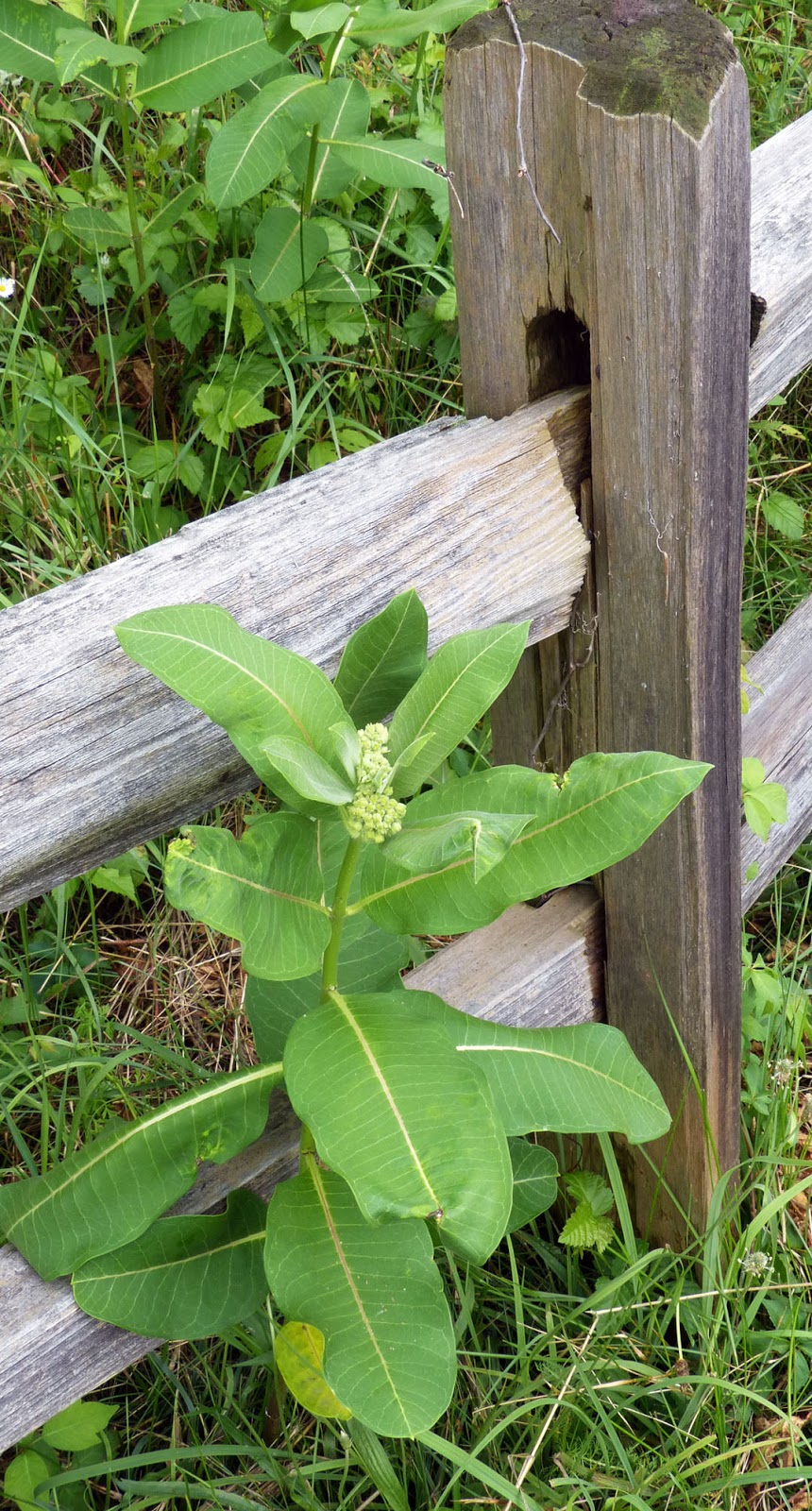
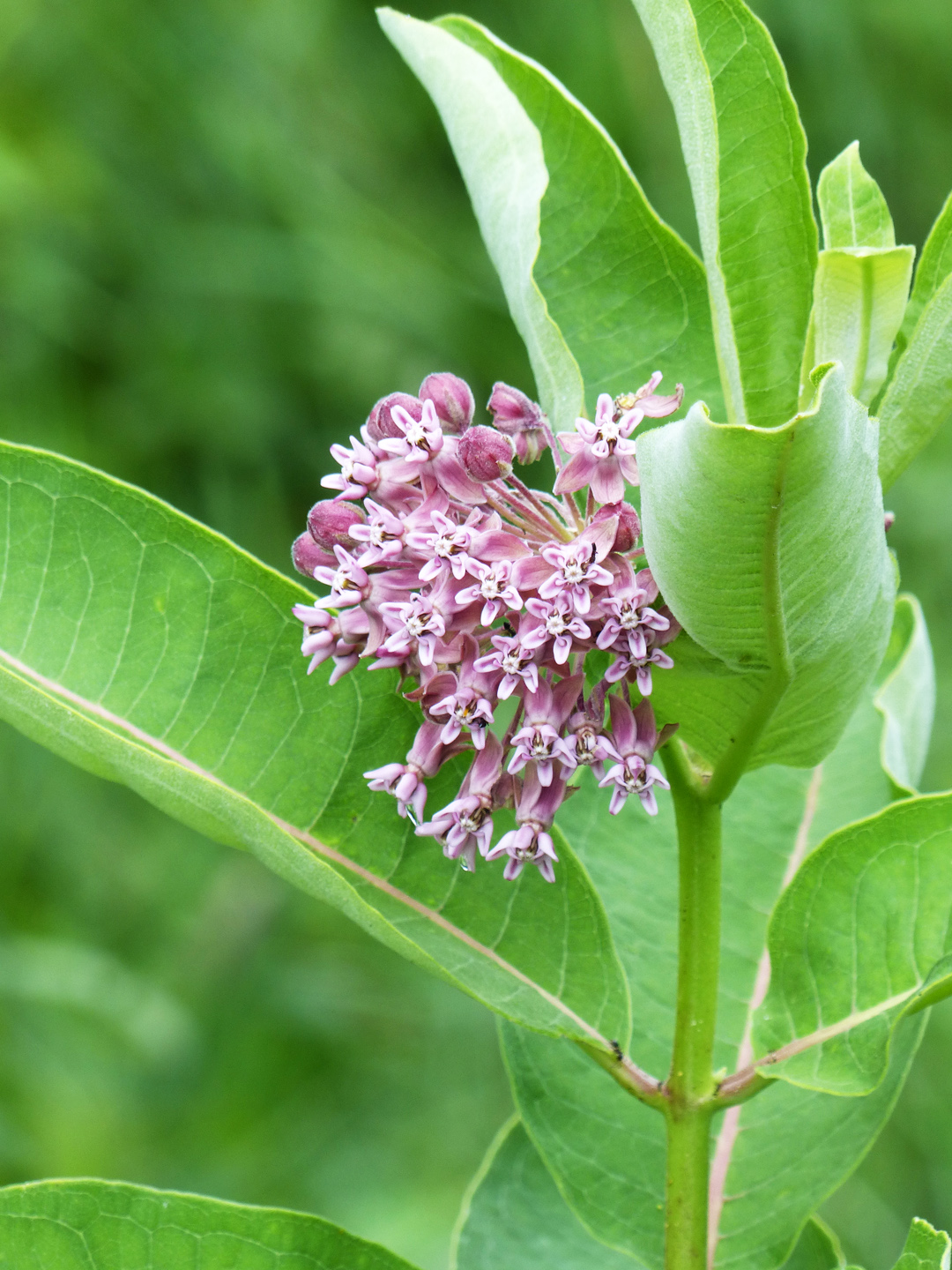
During my stay in Michigan I discovered a wonderful linear trail in Kalamazoo. Along the trail I spied local milkweed in various stages; in bud, in bloom and setting seed. During my trip I only spied one monarch. It was just outside Albion. (Images in this post are from my trip.) Hopefully since humans have drastically altered the Monarch's landscape to their detriment we will be able to find alternative areas to plant the milkweed that is essential to their continued existence.