Showing posts with label Lady Bird Johnson Wildflower Center. Show all posts

Tuesday, March 1, 2022

Wildflower of the Year (2022) According to Lady Bird Johnson Wildflower Center

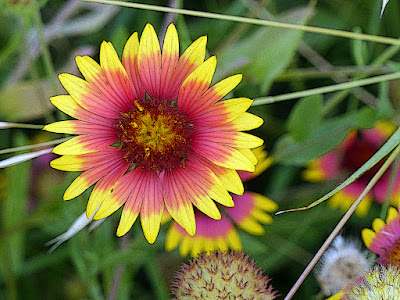
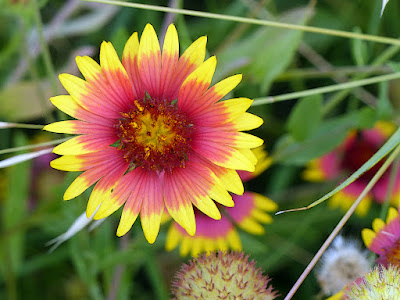
This year, Lady Bird Johnson Wildflower Center has named blanketflower, or firewheel, its wildflower of the year. I commend this flower too. It bursts into glorious color (mostly reds and yellows) over a long period of spring and early summer across much of the United States. In Texas it can often be found covering large sections of open fields alongside bluebonnets.

I snapped several photos of blanketflowers when I visited the Lady Bird Johnson Wildflower Center a few years ago. To celebrate it being named wildflower of the year I created a couple of photographic art versions of one of the images. You can click on them for a larger view. Out of curiosity, which version do you like better?

Monday, November 17, 2014

Vote to Show Support for Lady Bird Wildflower Center

TxDMV approves and oversees the manufacturing of personalized and specialty license plates. Designs are submitted by specialty plate marketing vendors and/or non-profit organizations and then reviewed to make sure the plates meet safety legibility requirements. The designs are then submitted to a voting process to help determine which designs will be produced.

The Lady Bird Johnson Wildflower Center has a proposed license plate in the current round of voting for new designs. You can help ensure it will be approved for production by voting for the wildflowers design (even if you don't live in TX). If approved for production, $22 from each plate purchased will go to the Wildflower Center to help them increase the use and conservation of native plants, and promote the restoration and creation of healthy landscapes across Texas.

Voting is open through this Friday, Nov 21st at 5pm! I think the design is lovely and hope that it gets approved. Your vote shows support for the Lady Bird Wildflower Center and gets it one vote closer to being able to take advantage of a new revenue stream. If you are a Texan and the design gets approved, then you can also support the Wildflower Center with your purchase of their beautiful specialty license plate.

Wednesday, April 9, 2014

Lady Bird Johnson Wildflower Center's 2014 Photo Contest

This year the Lady Bird Johnson Wildflower Center Photo Contest changed up its entry categories a bit and added a rule that you could enter a maximum of eight photos per person across whatever categories you entered. There was a new category, Birds and Butterflies with Native Wildflowers and Plants, that really appealed to me because of the nature shots that I tend to take as a starting point for my photographic art images. I found three images with birds and five images containing butterflies that I decided to enter this year. (You can click on the photos below to see larger images or go directly to my images on the photo contest page for voting by clicking here or to each individual photo's voting pages by clicking the title under each photo. When you are on those pages, if you click the photo to the left of the title, a much larger image eventually comes up.)

Female Cardinal on Bald Cypress------Western Kingbird on Pecan-------------Field Sparrow on Elm-----

---------------------Skipper on Pickerel Rush-----Gray Hairstreak on Late-Flowering Boneset---------------

---Fiery Skipper on Frog Fruit---Variegated Fritillary on Butterflyweed----Question Mark on Lantana---

Unless something manages to go viral, I don't expect to top the charts on the public voting, however it would still be very useful to me for developing future photographic art images to know which of these photos people like the best, so if you have the time please vote for your favorite(s). You may vote once per day (24 hour period) for whatever photo you like through May 9, 2014 (even if it isn't mine). If you really like an image but would prefer not to vote, please leave me a comment about the one(s) you like. The categories are judged privately, independent of the public voting.

Monday, December 16, 2013

Invasives and the Decline of the Texas Horned Toad

While habitat destruction ranks as the number one reason for loss of species and biodiversity, the invasion of exotic species (aka invasives) ranks number two. When aggressive invasives crowd out a native species it can often have a ripple effect on other native species.

One example of this that has happened while I have lived in Texas is the decline of the Texas horned lizard (aka horned toad). When I was in high school I was lucky enough to see some horned lizards in their native habitat. We also had a large harvester ant nest near the back of the pasture. At the time I didn't know about the link between that ant mound and the horned lizards. The ants didn't cause any trouble though so we left them alone.

Unfortunately, the invasive fire ants did cause trouble for the native harvester ants. They crowded them out and took over their territory. This spelled trouble for the horned lizard. Harvester ants are their main source of food. Isn't any ant as good to eat as another, you may ask? Unfortunately not, or at least not as easy to eat. The way fire ants swarm make them difficult for the horned lizard to make a meal of them without getting harmed. The horned lizard is now a protected species, due in large part, to the ripple effect of invasive fire ants crowding out the horned lizard's main food source, the harvester ant.

While it is unlikely that I will get a chance to spy a horned lizard in my area of Texas anymore, I did get excited that I might have actually seen one a few years ago. I caught a glimpse of a brown, spiky lizard. However as I was trying to remember exactly what a horned lizard looked like from many years before, the lizard turned around and it had a very long tail. Then I knew it wasn't a horned lizard. I did a bit of research and found out that the mystery lizard was a Texas spiny lizard. They are slimmer, not as spiky and have a longer tail than the horned lizard. While I miss seeing those iconic "horny toads", my property seems to have become a haven for the spiny lizard. That is a good thing for me since their diet consists of a wide range of insects.

But I digress, back to the plight of the TX horned lizard and other native plants and animals that suffer at the spread of invasives. You can help by educating yourself about invasives so you don't help them spread and by participating in citizen scientist projects like the Lady Bird Johnson Wildflower Center's Sentinel Pest Network and Invaders of Texas Program that the center partners with.
Saturday, May 11, 2013

National Wildflower Week - 2013

What a beautiful weekend we have on tap in North Texas to wrap up National Wildflower Week. I hope you are having great weather where you are. If not, wait out the rain, cold or whatever might be keeping you in this weekend and get out and enjoy the wildflowers in your area when you can. The purpose of this week is not only to view the beautiful native wildflowers around you but to also learn about their value and how to protect them from the encroachment of invasive species. While having a national week focused on these aims raises awareness, these activities shouldn’t be undertaken solely during this week.

You can learn more about wildflowers and what this week's aims are on the Lady Bird Johnson Wildflower Center’s site. They also have a separate page with 20 suggestions for observing National Wildflower week.

Here in North Texas, the bluebonnets are getting towards the end of their bloom season, however there are still lots of other native wildflowers still going strong such as spiderwort, plains coreopsis, primrose, sundrops, winecups and many others.

If the weather is nice, how about taking a stroll with mom on Mother’s Day to view the wildflowers in your area?

Saturday, April 27, 2013

Photo Contest Entries

I went a little crazy entering the Lady Bird Johnson Wildflower Center Photo Contest this year. A new category for photos taken at the center was added to the contest this year. The first three photos below are the ones I entered in this new category. I entered the last three photos in the botanical category. (You can click on the photos to see larger images.)

------Cicada Nymph Exoskeleton-----------------Horesmint----------------------Snake in the Dalea----------

---------Pink Evening Primrose----------------Blue-eyed Grass----------------------Bluebonnets--------------

Unless lightning strikes, I don't expect to top the charts on the public voting, however it would still be very useful to me for developing future photographic art images to know which of these photos people like the best, so if you have the time please vote for your favorite(s). (I have linked the name below each photo to the page to vote on that image.) You may vote once per day for whatever photo you like through May 6, 2013. If you really like an image but would prefer not to vote, please leave me a comment about the one(s) you like. The categories are judged privately, independent of the public voting.


Thursday, June 21, 2012

Sounds of Summer

Today is the first full day of summer, astronomically speaking. The official start of summer this year for the northern hemisphere was 6:09 pm CDT. Yes, many of us have felt summer temperatures for a while, have been enjoying the summer break from school, have been swimming and picnicking and experiencing many other things that go hand in hand with summer, but now it is official.

What sounds do you associate with summertime? The one that comes to my mind first is the sound of cicadas. On a hot summer evening you may hear the sound of the male cicada singing. I have not heard one yet this year but I did see evidence that adults must be out and about already in Austin, TX. I was at the Lady Bird Johnson Wildflower Center a couple of weeks ago and snapped these shots of discarded exoskeletons from when the cicada nymphs molted a final time and became adults.

After the male cicada attracts a female with his song, the female will lay clusters of eggs in small branches or twigs. When the eggs hatch, the nymphs fall to the ground and borrow into it seeking out the juices of tree roots. They will molt several times before emerging for one final molt as they become adults sometime from April through July depending on the species and location. This life cycle takes between 2 and 17 years and depends on the species of cicada. While the nymphs feed on the sap of tree roots and the adults may suck on the juices in tender twigs, “Texas species are not considered to be plant pests,” according to Texas A&M.

I will be listening for cicadas again this year. I find their singing to be soothing as it brings me back to lazy summer evenings and invites me to slow down and take in the sights and sounds around me. Whether it is this sound, the sound of fireworks, the sound of baseball games or whatever says summer to you, I hope you hear it and enjoy your summer.

Tuesday, May 8, 2012

National Wildflower Week 2012

In 1988, the American Wildflower Society sponsored the first National Wildflower Week. In 2002, the Lady Bird Johnson Wildflower Center was asked to become the celebration’s coordinator. While many communities local to you may be holding events centered around wildflowers this week, if you are near Austin, TX you will find many ways to celebrate this week that were organized by the Wildflower Center. They will have extended evening hours and reduced evening admissions this Tuesday and Thursday so that you can enjoy the beautiful wildflowers on their grounds. In addition, on Friday, May 11 the Wildflower Center will participate in National Public Gardens Day and host Gardens on Tour on Saturday, May 12.

If you get a chance to get out and enjoy your local wildflower display, you might find some of the varieties seen on the two note cards seen here from my four card late spring wildflower note card set. In addition to their beauty, native wildflowers are beneficial and should be protected from invasive species and allowed to complete their life cycle where possible without being mowed down. Native butterflies, birds and other critters depend on these plants for food and habitat. Native wildflowers also provide erosion control and many even make great Earth friendly, waterwise additions to a home landscape.

Is you mom a nature lover? I bet she’d enjoy a leisurely hike to enjoy your local wildflower displays for Mother’s Day this Sunday.